
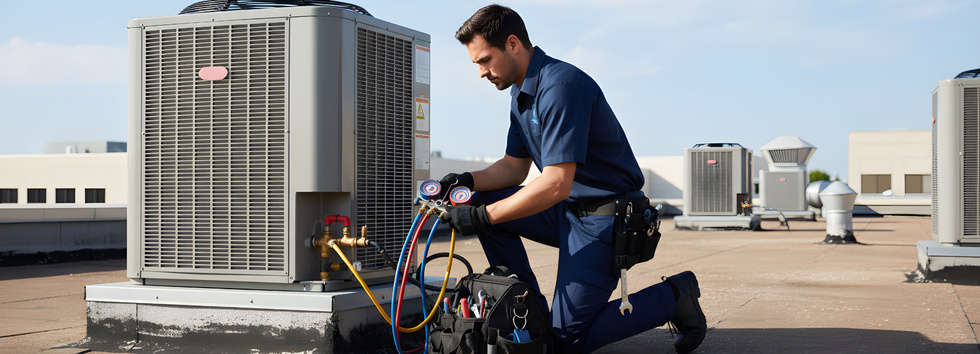
A July night, +90°F outside. At 2:47 AM a call to the front desk: "The AC in room 412 isn't working." The guest is sweaty, irritated, ready to check out right now. The HVAC technician has 15 minutes to turn a potential negative review into a story of "they fixed it in a minute." A broken AC in summer or a cold heater in winter isn't a technical problem. It's an emotional catastrophe. And it's the hotel HVAC technician who stands between the guest and that catastrophe.
In the hospitality industry, there's an unwritten rule: room temperature directly determines the guest's emotional state. Too hot — irritation. Too cold — discomfort. Stuffy — the feeling of a cheap hotel. Conversely: perfect climate creates a sense of care, even if the guest doesn't consciously notice its source.
The hotel HVAC technician (Heating, Ventilation, and Air Conditioning) is the specialist who manages this "invisible comfort." In the hotel's engineering department, this is one of the highest-paid specializations — and for good reason.
| Problem | Guest Reaction | Impact on Review |
|---|---|---|
| AC doesn't cool | Immediate call, demand for room change | Critical (−2-3 stars) |
| AC is noisy | Can't sleep, complaint in the morning | Significant (−1-2 stars) |
| Unpleasant smell from vents | Suspicion of poor hygiene | Critical (−2-3 stars) |
| Room too cold in winter | Feeling of a "cheap" hotel | Significant (−1-2 stars) |
Conclusion: the hotel HVAC technician isn't just a technical specialist. They're the person who shapes the guest's impression of the hotel through temperature and air quality.
Climate equipment operates on the "Invisible Comfort Paradox": when everything works perfectly, nobody notices; when something breaks, everyone notices. This defines the specific nature of HVAC work in hotels.
Unlike, say, a waiter whom the guest sees and evaluates directly, the hotel HVAC technician's work is judged only by negatives. No complaints — you're doing well. Complaints — you're doing poorly. There's no in-between.
This leads to key working principles:
A preventive maintenance system is the main tool for transforming "reactive" work into "preventive" work. When the HVAC technician works by maintenance schedule rather than responding to angry guest calls — that's the sign of a mature engineering department.
HVAC systems consume 40-50% of a hotel's total energy. This makes the hotel HVAC technician not just a comfort specialist but a key player in energy cost management.
| Cost Category | Share of Energy Consumption | Responsibility |
|---|---|---|
| Air Conditioning | 25-35% | HVAC Technician |
| Heating | 10-20% | HVAC Technician |
| Ventilation | 5-10% | HVAC Technician |
| Lighting | 15-20% | Electrician |
| Hot Water | 10-15% | Plumber |
| Other Equipment | 10-15% | Various Specialists |
A competent hotel HVAC technician can reduce energy consumption by 15-25% without compromising guest comfort. Tools include:
When the Chief Engineer defends the HVAC maintenance budget to management, they use exactly these numbers: savings on maintenance translate to losses on electricity.
A hotel HVAC technician must master different system types — from simple split systems to complex central chillers. System choice depends on hotel size and class.
| System | Hotel Size | Complexity | What the Technician Must Know |
|---|---|---|---|
| Split Systems | Small (under 50 rooms) | Basic | Refrigerant charging, cleaning, component replacement |
| Multi-Split | Medium (50-150 rooms) | Intermediate | Balancing between units, diagnosing shared faults |
| VRF/VRV | Large (150+ rooms) | High | Manufacturer certification, BMS integration |
| Chiller-Fan Coil | Large chains, resorts | High | Hydraulics, heat exchangers, pump stations |
Important: a hotel HVAC technician in a large property with a VRF system and one in a boutique hotel with split systems represent different qualification levels. When hiring, verify experience specifically with the systems installed in your hotel.
Modern hotels integrate climate equipment into a Building Management System (BMS). For the hotel HVAC technician, this means:
The BMS + CMMS combination provides complete control: BMS shows what's happening now, while CELLYPSO CMMS manages maintenance tasks — from scheduled prevention to emergency calls. The HVAC technician sees both the current system state and the history of all work on each piece of equipment.
The hotel HVAC technician's work follows a clear seasonal rhythm. Mistakes in seasonal preparation lead to emergencies and lost guests.
| Period | Focus | Critical Tasks |
|---|---|---|
| March-April | Summer Preparation | AC maintenance, refrigerant level checks, drain line cleaning |
| May-August | Cooling Season | Rapid breakdown response, load monitoring, peak operation |
| September-October | Winter Preparation | Heating system maintenance, pressure testing, boiler inspection |
| November-February | Heating Season | Heating monitoring, emergency repairs, coolant checks |
Rule: maintenance happens one month before the season starts. If you start preparing AC units for summer in May — you're already late. The first heat wave will catch the hotel with unready equipment.
The hotel HVAC technician is one of the most heavily equipped positions in the engineering department. Professional tools are expensive, but quality work is impossible without them.
Without these documents, the hotel HVAC technician cannot legally perform most work:
The hotel HVAC technician is one of the most promising specializations in the hospitality industry. The high entry barrier (certifications, specialized knowledge) is offset by stable demand and good compensation.
| Path | Progression | Requirements |
|---|---|---|
| Vertical | HVAC Technician → Senior Technician → Chief Engineer | Expanded competencies, leadership skills |
| Specialization | HVAC Technician → Certified Brand Specialist (Daikin, Carrier) | Manufacturer training, work with complex equipment |
| Energy Management | HVAC Technician → Energy Efficiency Specialist | BMS knowledge, analytics, ESG reporting |
| Entrepreneurship | HVAC Technician → Service Company Owner | Client base, business skills, team |
The hotel HVAC technician's advantage over the maintenance technician: narrow specialization ensures irreplaceability. A good climate specialist is always in demand — in hotels as well as office buildings, shopping centers, and healthcare facilities.