
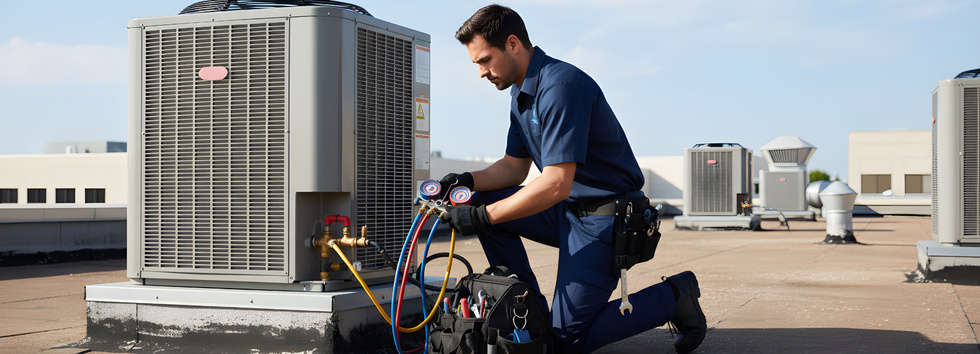
A July night, 90°F outside. At 2:47 the front desk gets a call: the AC in room 412 has quit. The guest is sweating, irritated, ready to check out on the spot. The hotel HVAC technician has fifteen minutes to turn a one-star review into "they fixed it in a minute."
A dead AC in summer, or a cold radiator in winter, isn't really a technical problem. It's an emotional one. And the technician is the person standing between the guest and that bad night.
Hospitality has an unwritten rule: room temperature drives the guest's mood. Too hot, and they're irritated. Too cold, and they're uncomfortable. Stuffy, and the place feels cheap. Get it right, though, and the room feels cared-for, even if the guest never works out why.
The hotel HVAC technician — heating, ventilation, and air conditioning — is the person who manages that invisible comfort. In the engineering department, it's one of the best-paid specializations, and for good reason.
| Problem | Guest Reaction | Impact on Review |
|---|---|---|
| AC doesn't cool | Immediate call, demand for room change | Critical (−2-3 stars) |
| AC is noisy | Can't sleep, complaint in the morning | Significant (−1-2 stars) |
| Unpleasant smell from vents | Suspicion of poor hygiene | Critical (−2-3 stars) |
| Room too cold in winter | Feeling of a "cheap" hotel | Significant (−1-2 stars) |
So the HVAC technician isn't only a technical specialist. They shape what guests think of the whole hotel, through nothing more than temperature and air quality.
Climate equipment lives by what you might call the invisible-comfort paradox: when it works perfectly, nobody notices; when it fails, everybody does. That shapes the whole nature of HVAC work in a hotel.
Unlike a waiter, whom the guest sees and judges directly, the HVAC technician's work is measured only by its failures. No complaints means you're doing well. Complaints mean you're not. There's no in-between.
This leads to key working principles:
A preventive maintenance system is what turns reactive work into planned work. When the HVAC technician is following a schedule instead of chasing angry guest calls, that's the mark of a mature engineering department.
HVAC systems consume 40-50% of a hotel's total energy. That makes the technician far more than a comfort specialist — they're central to controlling energy costs.
| Cost Category | Share of Energy Consumption | Responsibility |
|---|---|---|
| Air Conditioning | 25-35% | HVAC Technician |
| Heating | 10-20% | HVAC Technician |
| Ventilation | 5-10% | HVAC Technician |
| Lighting | 15-20% | Electrician |
| Hot Water | 10-15% | Plumber |
| Other Equipment | 10-15% | Various Specialists |
A good HVAC technician can cut energy use by 15-25% without the guests feeling a thing. The levers:
When the chief engineer defends the HVAC budget to management, these are the numbers they bring: every dollar saved on maintenance comes back as a higher electricity bill.
A hotel HVAC technician has to handle everything from simple split systems to central chillers. Which one a property runs depends on its size and class.
| System | Hotel Size | Complexity | What the Technician Must Know |
|---|---|---|---|
| Split Systems | Small (under 50 rooms) | Basic | Refrigerant charging, cleaning, component replacement |
| Multi-Split | Medium (50-150 rooms) | Intermediate | Balancing between units, diagnosing shared faults |
| VRF/VRV | Large (150+ rooms) | High | Manufacturer certification, BMS integration |
| Chiller-Fan Coil | Large chains, resorts | High | Hydraulics, heat exchangers, pump stations |
One caveat: a technician running a VRF system in a large property and one handling split units in a boutique hotel are at very different skill levels. When you hire, check for hands-on experience with the exact systems you run.
Most modern hotels tie their climate equipment into a Building Management System (BMS). For the technician, that means:
BMS and CMMS together give full control. BMS shows what's happening right now; CELLYPSO CMMS runs the maintenance side, from scheduled prevention to emergency calls. The technician sees the live system state and the full work history of every unit in one place.
An HVAC technician's year follows a clear seasonal rhythm. Get the prep wrong and you're left with emergencies and lost guests.
| Period | Focus | Critical Tasks |
|---|---|---|
| March-April | Summer Preparation | AC maintenance, refrigerant level checks, drain line cleaning |
| May-August | Cooling Season | Rapid breakdown response, load monitoring, peak operation |
| September-October | Winter Preparation | Heating system maintenance, pressure testing, boiler inspection |
| November-February | Heating Season | Heating monitoring, emergency repairs, coolant checks |
The rule: do the maintenance a month before the season starts. If you're prepping the AC units for summer in May, you're already late, and the first heat wave will catch you with equipment that isn't ready.
The HVAC technician carries more gear than almost anyone else in the engineering department. The professional tools aren't cheap, but you can't do the work properly without them.
Without these, the technician can't legally do most of the job:
The hotel HVAC technician is one of the more promising specializations in hospitality. The barrier to entry is high — certifications, specialized knowledge — but steady demand and solid pay more than make up for it.
| Path | Progression | Requirements |
|---|---|---|
| Vertical | HVAC Technician → Senior Technician → Chief Engineer | Expanded competencies, leadership skills |
| Specialization | HVAC Technician → Certified Brand Specialist (Daikin, Carrier) | Manufacturer training, work with complex equipment |
| Energy Management | HVAC Technician → Energy Efficiency Specialist | BMS knowledge, analytics, ESG reporting |
| Entrepreneurship | HVAC Technician → Service Company Owner | Client base, business skills, team |
The HVAC technician's edge over a generalist maintenance technician is simple: deep specialization makes you hard to replace. A strong climate specialist is always in demand — not just in hotels, but in office buildings, shopping centers, and hospitals.