
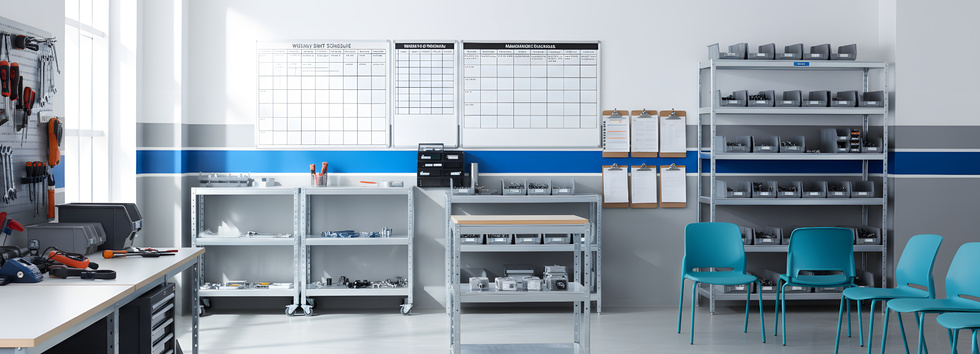
Hotel engineering organization isn't an org chart on paper. It's the answer to a simple question: Who shows up when a pipe bursts in the VIP suite at 2 AM? Who takes responsibility? Who knows where the shutoff valve is and how to get there? In a well-organized engineering department, the answer to all these questions is one specific person with their phone ready.
"We need more technicians"—the standard reaction to rising complaints. But hotel engineering organization isn't about headcount. A hotel with 10 technicians and no system performs worse than one with 5 technicians and clear processes.
Typical scenario: A hotel hires an additional electrician because "they can't keep up." A month later: response times haven't improved. Why? Because the problem wasn't lack of hands—it was poor hotel engineering organization. Without clear prioritization, technicians were working in order of arrival, not urgency.
Proper technical department structure isn't about the number of heads—it's about three things: who's responsible for what, who makes decisions when priorities conflict, and how information flows between people. Adding staff without these three elements only increases chaos.
The industry standard for hotel engineering organization is 1 technician per 50 rooms. This is the baseline calculation, adjusted based on factors.
| Factor | Adjustment | Reason |
|---|---|---|
| Building age over 20 years | +20-30% | More breakdowns, complex repairs |
| 5-star category | +15-25% | Higher expectations for speed and quality |
| Spa, pool, fitness | +1-2 specialists | Specialized equipment |
| Conference center | +1 technician | AV equipment, higher load |
| Modern automation (BMS) | -10-15% | Monitoring reduces failures |
Example of hotel engineering organization staffing: 200-room hotel, 4-star, building 25 years old, has a pool. Calculation: 200÷50 = 4 technicians baseline, +25% for age = 5 technicians, +1 for pool = 6 technicians + chief engineer.
Hotel engineering organization in a small hotel is often a one-person show. A general maintenance technician who fixes faucets, changes light bulbs, and communicates with contractors. A separate chief engineer isn't cost-effective—that function is handled by either the general manager or a senior technician with expanded authority.
| Position | Count | Key Functions |
|---|---|---|
| Chief Engineer | 1 | Planning, budget, contractors, escalations |
| General Technician | 2-3 | All types of routine repairs |
| Specialist (Electrician or Plumber) | 1 | Specialized work + training generalists |
| Position | Count | Key Functions |
|---|---|---|
| Chief Engineer | 1 | Strategy, budget, capital projects |
| Supervisor / Senior Technician | 1-2 | Shift coordination, quality control |
| Electrician | 2-3 | Electrical systems, emergency lighting |
| Plumber | 2-3 | Water supply, drainage |
| HVAC Technician | 2-3 | Climate control, ventilation |
| General Maintenance | 2-4 | Minor repairs, moves, assistance |
Hotel engineering organization must answer the question: How do you ensure 24/7 coverage with limited staff? The answer: "Triple coverage."
For critical systems (elevators, power, water), you need three layers of protection:
| Shift | Hours | Staff | Focus |
|---|---|---|---|
| Day | 07:00–15:00 | Full team | Preventive maintenance, planned work |
| Evening | 15:00–23:00 | 50% of team | Current work orders, prep for night |
| Night | 23:00–07:00 | 1-2 on duty + on-call | Emergencies, critical system monitoring |
The night shift is most vulnerable in any hotel engineering organization. What matters isn't just the duty technician, but the system: night patrol checklist, direct line to front desk, escalation instructions.
A key question in technical department structure: hire specialists or generalists? The answer depends on the hotel's size and specifics.
| Criterion | Generalist Better | Specialist Better |
|---|---|---|
| Hotel size | Up to 100 rooms | 150+ rooms |
| Task type | Many small, varied tasks | Complex systems (chillers, BMS) |
| Response time | Quick start critical | Correct execution critical |
| Budget | Limited | Allows specialization |
Optimal hotel engineering organization for medium hotels: core of 1-2 specialists (electrician + plumber or HVAC tech), the rest generalists. Specialists handle complex tasks and train generalists on basic operations in their area.
Some work is always outsourced—that's normal. Hotel engineering organization includes managing external vendors as an essential element.
The key tool is the SLA (Service Level Agreement). The contract should include:
All contractor interactions should be tracked in a system. CELLYPSO CMMS enables creating work orders for contractors, tracking their status, monitoring SLA compliance, and generating work history to evaluate each vendor's performance.