

A hotel housekeeper, also called a room attendant, is a front-line member of the housekeeping team. They clean and prepare guest rooms, restock amenities, and keep each space ready for the next arrival. A housekeeper's duties span every type of cleaning on their floor, from daily room cleaning to deeper resets, and they answer to the floor supervisor who runs the section.
Every hotel writes a job description for the role, and the work itself stays fairly consistent from one property to the next. A four-star resort and a budget inn expect much the same routine, so most managers adapt an existing template rather than start from scratch.
At its core, the job is about turning rooms over: cleaning each space, servicing the bathroom, and resetting amenities so the room is ready for the next guest. A shift usually covers a fixed block of rooms — often 12 to 14 in an eight-hour day, depending on room type and whether it's a stay-over or a checkout clean.
Speed matters, but so does consistency. Hotels lean on a standard cleaning sequence for a reason: it makes quality easy to check, and a supervisor can spot a skipped step at a glance.
The role also comes with a dress code and a few simple standards — a clean uniform, a tidy appearance, and a professional manner around guests.
Throughout, the attendant keeps an eye on the room and reports anyone who shouldn't be there.
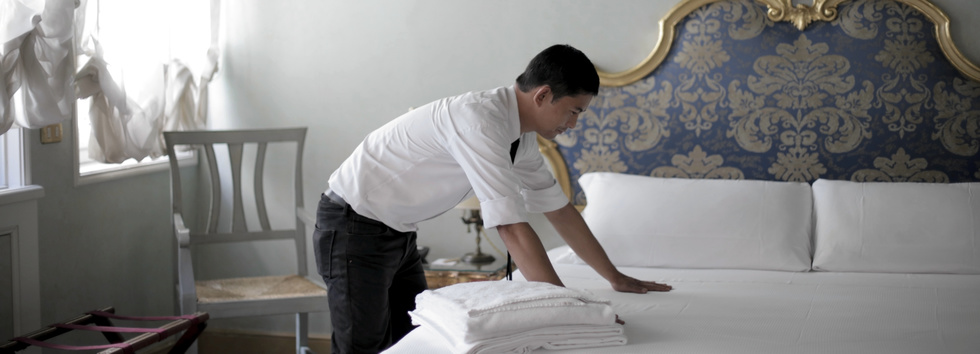
New hires read and sign off on these tasks when they start, and they keep a copy to hand. Having the list nearby makes the day easy to follow — what to do, in what order, and what to confirm before reporting a room as finished.
Some properties ask for more. At higher-end hotels, the team may keep an eye on a room for the length of a stay and flag any breach of house rules to the floor supervisor or management.
These tasks are usually written down as a formal document that management approves and staff sign to confirm they've read it. Increasingly they live as digital checklists in a housekeeping management system rather than on paper, so nothing gets skipped. Following them isn't optional, and repeated or serious lapses can lead to disciplinary action.